
That Sounds Risky · Episode 2
Is It Fear or an Excuse? The Story That’s Keeping You Stuck
0:00 / 18:31
Fear rarely shows up looking like fear. It shows up sounding reasonable. “I just need more time.” “I need more clarity first.” “Now’s not the right season.” If you’ve been saying the same line for months, this episode is for you.
In Episode 2 of That Sounds Risky, Sara Emmerson breaks down how to tell a real reason from a fear wearing a disguise, and what changes once you can see it. She walks through the RISK test, a simple way to check whether the thing you keep saying is information or fear: Repeated (how long have you been saying it?), Isolate (what’s the fear underneath?), Sacrifice (what’s it costing you to wait?), Keep moving (one small action in the next 24 hours).
She also makes the case that staying stuck is its own kind of work, that readiness was never a feeling you wait for, and that confidence shows up after you move, not before.
In this episode:
- How to tell a real reason from an excuse (the RISK test)
- Why “I need more clarity” is often a courage problem, not a clarity problem
- The hidden cost of staying exactly where you are
- Why every version of your life requires work, so choose the work that’s worth it
- How to take the next brave step before you feel ready
“Readiness isn’t a feeling. It’s a decision.”
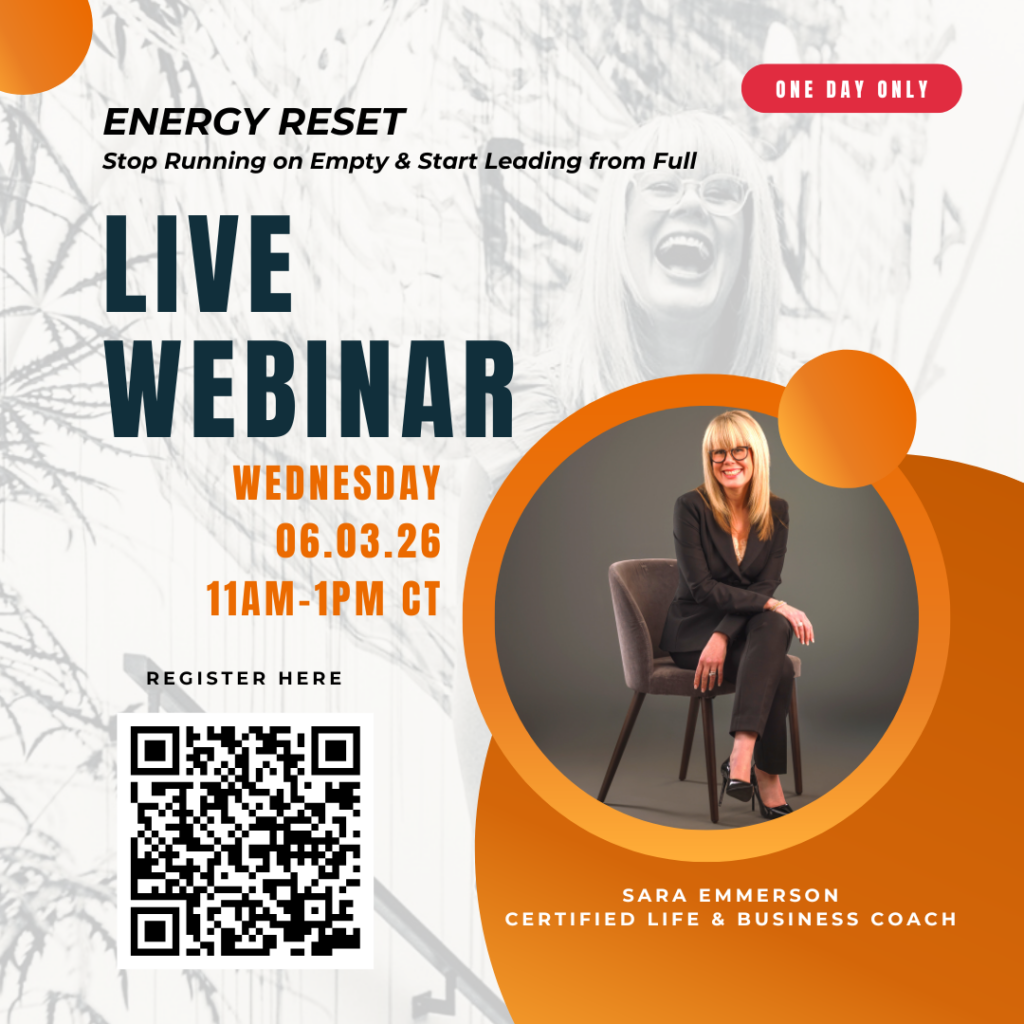
Sara Emmerson is a certified life, business, and executive coach (ICF PCC) who helps capable people stop overthinking and make the brave move they’ve been putting off.
Learn more and work with Sara at saraemmersoncoaching.com. New episodes weekly, so follow along.
Readiness isn't a feeling, it's a decision. You don't become ready and then take the risk. You take the risk and become ready along the way.
Key takeaways
- A repeated story is a signal: when the timeline and details change but the excuse stays the same, it's likely fear rather than new information.
- One of the most common fears isn't failure but the work required — the discipline, consistency, boundaries, and hard conversations a change would demand.
- Staying stuck also costs energy: frustration, regret, and avoidance are their own kind of labor, so the real question is which work is worth it.
- The RISK test walks through four questions — is it Repeated, Isolate the fear underneath, name the Sacrifice or cost, and Keep moving with one action in 24 hours.
- Coaching doesn't remove risk; using the soccer analogy, it helps you gain possession — slow down, assess the field, and separate fear from facts before you move.
In this episode
- 0:00Fear rarely shows up as fear
- 1:15The excuses that sound responsible
- 2:31Fearing the work, not failure
- 5:02Introducing the RISK test framework
- 6:18Isolating the fear and its costs
- 8:49Who has heard your story
- 10:04Losing a 23-year career
- 11:20Calculating the risk of staying
- 12:35Soccer players and gaining possession
Read the full transcript
Sara Emmerson: Welcome back to That Sounds Risky with Sara Emmerson. Episode 2, Is It Fear or an Excuse? The Story That's Keeping You Stuck. I'm Sara Emmerson, and this is a podcast where we talk about the decisions that shape us, the risks that stretch us, and the courage that it takes to build a meaningful life. Today, I wanna talk about something I see every single week in my coaching practice. I see people who know what they want, but who aren't moving. They're stuck. Not because they're incapable, and not because they're lazy, and not because they don't care. In fact, they care deeply. They're just standing still. They're stuck. And usually they tell me it's because they need more time, they need more clarity, they need more confidence, more money, the right opportunity. But after coaching hundreds of people across the US and in multiple countries, I can tell you this: I've learned something important. Fear rarely shows up looking like fear. Fear rarely shows up looking like fear. Fear shows up looking like an excuse. And today's question is simple: is it fear or
is it an excuse? So we're going to find out together. And we're gonna find out because there's always stories that we tell ourselves. And maybe you said things like, I just need more clarity. I need to save a little bit more money. I need one more certification. I'll do it after the summer. I'll do it when things settle down. I'll do it when the kids are older. I'll do it next year. Those all sound reasonable. In fact, they sound responsible. But here's what I've noticed. The timeline changes, the details change, the circumstances even might change, but the story, it stays the same. And if the story keeps repeating itself, it may not be information anymore. It may be fear. Because fear is smart. Fear doesn't always scream. Fear whispers. Fear says, let's wait. Let's think about it. Let's, let's do a little bit more research, or in some people's case, a lot more research. Let's just be sure before we take that next move. And before you know it, you have passed years.
You have passed opportunities. You have passed relationships because you have listened to that little small voice of fear, not because you lacked the ability to move forward, but because fear convinced you to delay. And the fear that nobody likes to talk about is this: when most people think about fear, they think about failing, right? They think fear and failing go hand in hand, and that's not always true. But one of the biggest fears I see isn't failure. It's the work. People don't always fear that they can't do it. In fact, I have a lot of people that I work with that know they can do it. They're very confident they can do it. They fear what it's going to require of them if they do, because they know building the business will take work. Improving the marriage will take work. Changing careers will take work. Losing the weight will take work. Writing the book will take work. Stepping into leadership will take work. They know they have the skill, but they're curious if they have the discipline or energy to do what it takes to get to the next level. Do they have
the consistency? Do they have the boundaries? Are they willing to have the difficult conversations? Do they need new habits or maybe even a new identity shift internally because they have that screaming imposter syndrome? And all of that feels overwhelming. I get it. I've been there. And not because they're weak, not because they are cowards, but because they're human, because they're tired, because they're carrying a lot already. Again, I know this. I've been there. But here's what I remind my clients of often. Every version of your life requires work. Every version of your life that has ever happened has required work. And staying stuck requires a lot of work. You're just trading where you're putting the energy. Being frustrated is a lot of work. Living with regret is work. Avoiding the conversation Takes a lot of work, but building something meaningful takes work.
The question isn't whether you're going to work. The question is, which work is worth it? Which work is worth it in this season of your life? And so I want to offer you a little fun test for you to take today. It's called the risk test. So how do you know if you've turned a fear into an excuse? Here's how you're going to know. I want you to get, to give you a simple framework and it's called, like I said, the risk test. First, R, repeated. Now, if you have a pen and pencil, I want to encourage you go, um, get it now if you don't have one. If you do, get ready because I want you to take some notes. I want this to be something that you can come back to, this risk test. So the first one is, this simple framework is R, repeat it. I want you to ask yourself, how, um, have I been saying this for months? Have I been saying this excuse or this fear for months or years? Or how many times have I repeated this story to myself over and over? Maybe it's even been, how many times have I said this to myself today? I want you to answer that. And then next, I. Isolate. What is the fear
underneath it? What is the fear underneath the excuse that you keep bringing up? What are you actually afraid of? Is it failure? Maybe it's success. You're actually afraid of succeeding because of what it's going to mean if you do. Maybe it's judgment or disappointment. What is the fear? Of the work that's going to be required. Maybe it's you're fearing making the wrong decision. I get it, but that fear is keeping you stuck. I want you to identify what is that fear underneath it. S, sacrifice. What is the excuse costing me? I wanna tell you that your excuse that you're making right now, it's costing you something. Costing you energy. It's costing you regret. It's costing you something. I want you to identify what is it costing you? And then what's the opportunity cost? What is the opportunity cost? What is the emotional cost? There's an emotional cost that is happening right now. There's a sacrifice that this excuse is
paying right now. And so what is that emotional cost? And then what is the financial cost of this excuse? Many of you are staying in something longer than you need to, and it's paying rent in your mind and in your life. And you need to identify what is that financial cost. And lastly, what is the relational cost? There's a sacrifice that this excuse is costing you, and we need to identify what it is. And then K, I want to, I want to help you keep moving. If you're going to risk, we need to keep moving. And so I want you to ask yourself, what's one action you can take in the next 24 hours? Not 10, not one, just one step. What is one step that you can take in the next 24 hours towards thwarting this excuse? Because momentum doesn't come from thinking. Momentum comes from movement. You need to take action. It's great to think about it, it's great to have intentions, it's great to have dreams, but if you don't have movement, no momentum will come. If you don't have movement, there will be no momentum.
So here's a question I ask clients all the time: How many people have heard you tell this story? How many people have heard you tell this story? I know for me, even starting this podcast, many people had heard me talk about doing this and I just hadn't taken the risk yet. And so I had to create a plan to take action, to create the momentum, to have the movement happen. I want you to think about it. Whatever your excuse is, how many people have you talked to about that? Have you told your spouse? Your best friend, your coworkers, your coach, your parents, your business partner. If you've told the same story over and over for months or years, there's a good chance it's no longer helping you understand your situation. It's helping you stay in it. It's helping you stay stuck. And at some point, what started as a reason becomes permission. Permission to wait, permission to delay, permission to stay exactly where you are. And I say that with love because I've done this too. 6 years ago, I lost my job after spending 23 years building a career in a certain
industry, and I could have spent years waiting. I could have waited for certainty, waited for confidence, waited for a guarantee. Waited until I felt ready. But instead, I started taking small steps, and I was scared. I was very scared. There were moments when I questioned everything, moments when I wondered if I could really build something on my own. I had people telling me that I should go a different direction because it would be too difficult to build it on my own. And I had moments when I listened to those voices and I entertained, is that true? Moments when I wondered if I should just pack up and go back to what was familiar. But here's what I learned. Readiness isn't a feeling, it's a decision. You're gonna hear me say that a lot. Readiness isn't a feeling, it's a decision. You don't become ready and then take the risk. You take the risk and become ready along the way. Confidence follows action. Every time, because confidence is competence, and you're not going to get competent at something if you don't do it, if the movement
isn't there, not the other way around. Confidence always follows action. There is a cost of staying, and I want you to understand what that is. Most people spend their lives trying to avoid risk. But they never calculate the risk of staying. Have you ever thought about that? There is a risk of staying. The business they never started, the dream they never pursued, the conversation they never had, the opportunity that they never took, the life they never fully stepped into. Every day you stay stuck has a cost. And sometimes the greatest risk isn't failing, it's spending years preparing for a life you never started. We prepare in our mind for things all the time, and if you don't ever start them, you have a life where you stayed stuck. So I want you to think about taking possession before you take the risk. I wanna share an analogy, and some of you have maybe heard Brené Brown use this analogy too, and I love it. And it stuck with me, and it's very appropriate right now with the World Cup going
on. And I want you to think about a 5-year-old soccer player and what 5-year-old soccer players look like playing. They kick the ball everywhere, and in their mind, kicking it as high as possible is the right way to go. Just get it down the field as high as possible. But the ball comes towards them and they immediately react. They immediately kick it. There's no strategy, there's no pause, there's no awareness of what's happening around them. They just react. Now think about the athletes playing right now in the World Cup. When the ball comes towards them, they don't immediately kick it. They receive it, they maybe even take it into their chest, they let it drop, they gain possession, they look around, and they assess the field. They identify the opportunities that exist, and then they understand the risks. They determine where the ball needs to go next, and then they make their move. The goal isn't avoiding risk. The goal is learning how to navigate it. They're still taking the shot. They're still making the pass. They're still risking failure, but they've developed the ability to slow down, to assess the situation, and make a more intentional
decision, a more intentional risk. That's what coaching does. Many people ask me, how does coaching help us in our risk-taking? That's how it helps. Coaching doesn't eliminate your risk. Coaching helps you gain possession of it. It helps you slow down long enough to understand what's actually happening. It helps you separate fear from facts, excuses from truth. Emotion from strategy. Instead of reacting to whatever fear throws at you, you learn how to evaluate it. You learn how to see the field. You learn how to identify your options. You learn how to make decisions with greater confidence and clarity. And that's what I do every day with my clients, whether they're making a career change or starting a business, navigating a leadership challenge, Making a big major life decision, or simply trying to figure out what's next. Together, we gain possession of the situation. We assess the field, we create a strategy, and then we move. Not because the risk disappears, it's still there, but because you're prepared to take it. So this week, I want you to identify one excuse that
you've been repeating. Just one. And I want you to think about it, write it down, put it in your notes on your phone, whatever you need to capture it. And then ask yourself this: what fear is underneath this? What work am I afraid this will require of me? And what is this excuse costing me? And then I want you to take one action in the next 24 hours towards it. Send the email. Make the phone call, book the meeting, submit the application, start the conversation, write the song, record the podcast. Take one step because movement creates momentum and momentum changes confidence. Momentum changes your confidence and it creates it one move at a time. So if today's episode felt a little too personal, If you recognized one of your own excuses, maybe, or you've been telling yourself that the same story is happening over and over to you, and you have taken that story to now be truth in your life, I want you to think about this. I want you to stop trying
to figure this out alone. One of the greatest gifts of coaching is having someone help you see what you can't see yourself. We all have blind spots, including myself. That's why I'm such a believer that coaching is going to be something I have forever. I have multiple coaches in my life because I know I have blind spots personally, professionally. We all do. We all have stories that we've been repeating for so long that they now sound true. And sometimes what feels like clarity is actually a courage problem. It's not a clarity problem, it's a courage problem. And sometimes what feels like a timing problem is actually a fear problem. And sometimes what feels like a lack of opportunity is really a lack of action. Opportunities always exist, but are you willing to take action towards them? That's the question. Coaching helps you identify the fears hiding underneath the excuses. And each of us have them, every single one of us. Coaching helps you challenge the stories that are keeping you stuck, and it helps you gain possession of what's really happening, and it helps
you create a clear strategy for moving forward. If you're at a crossroads in your life or your leadership or your career or your business, or maybe in relationships, and you're tired of telling yourself the same story, over and over again, I'd love to help you. So I want you to visit sarahemerson.com and schedule a coaching consultation, because together we can identify what's really holding you back. We can help you create a strategy for moving forward and help you take the next right step. Because your goal isn't to eliminate the risk. The goal is to become the kind of person who knows how to face it. Thanks for listening today to That Sounds Risky. And until next time, remember, fear whispers, excuses repeat, but courage takes possession and moves forward anyway, because That Sounds Risky.