
That Sounds Risky · Episode 17
Stop Carrying What Isn’t Yours | The 3 Levels of Control
0:00 / 12:49
You leave a meeting and spend the next three hours replaying what you said. Meanwhile, there’s a conversation you haven’t had or a decision you keep putting off.
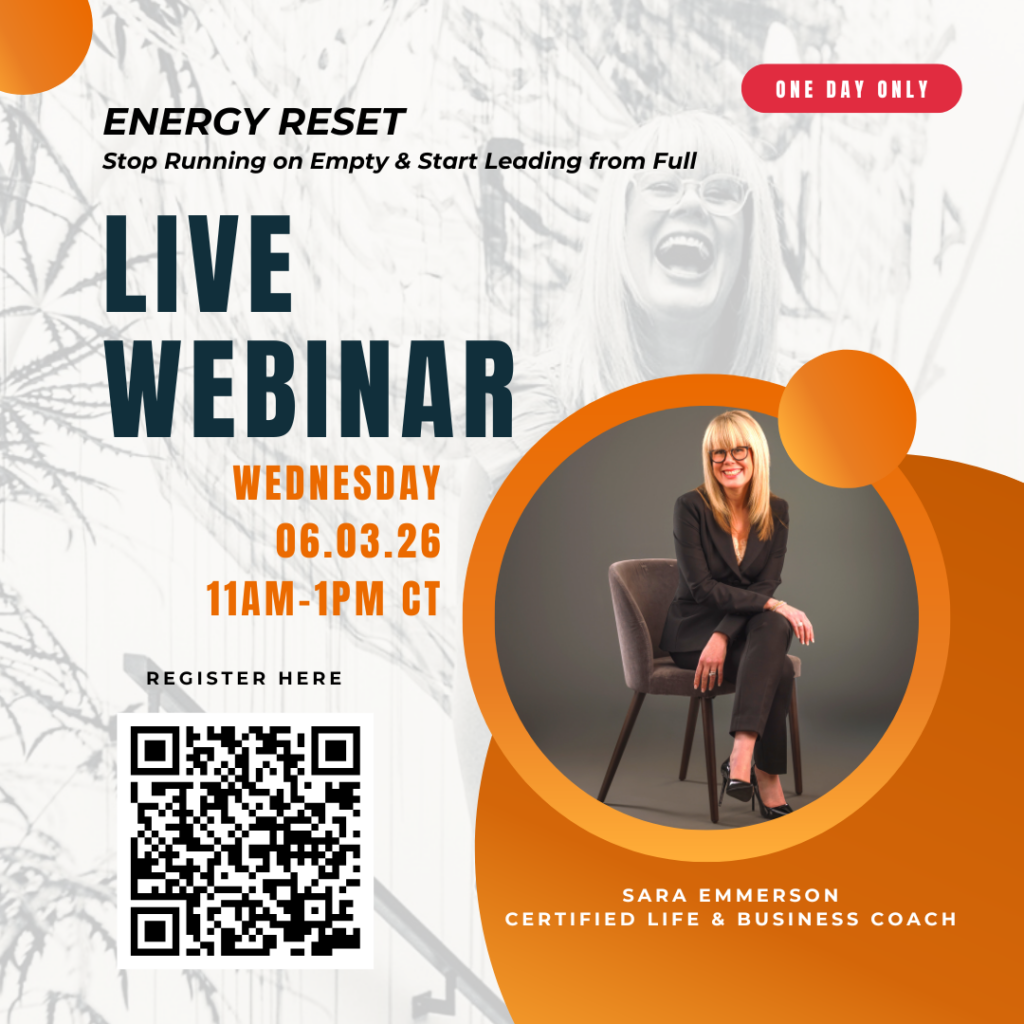
Sara Emmerson walks through the 3 Levels of Control: full control, partial control and no control. She explains how to own your actions, use your influence without taking over, and redirect your attention when the final decision belongs to someone else.
In this solo episode:
• Full control: own your preparation, words, follow-through and boundaries.
• Partial control: set expectations, ask questions and let others own their part.
• No control: release the final answer while keeping boundaries and backup plans.
• Work through an unanswered proposal using all three levels.
• Choose one action you can take in the next 24 hours.
Chapters
00:00 Where your energy is going
01:21 Full control: own your part
03:17 Partial control: use your influence
06:48 No control: release and redirect
08:58 The unanswered proposal
09:51 Being the person who does everything
10:28 Your next action within 24 hours
11:47 Coaching and closing
Learn about coaching: https://saraemmersoncoaching.com/
If you keep rescuing everything, you're not actually rescuing it. You're hiding the real problem.
Key takeaways
- Full control covers only your own preparation, words, follow-through, boundaries and requests — not results, and not every thought or feeling that shows up.
- Most of life sits in partial control, which people avoid because taking over makes them the hero and claiming no control excuses them from acting.
- Taking over a teammate's part solves today's problem but leaves you overloaded and the team dependent on you, which doesn't scale.
- Releasing control isn't indifference — you can still set boundaries, hold people accountable and make a backup plan, you just can't make someone else's final decision.
- The exercise: pick one situation occupying your head, write down what you can fully control, what you can influence and what you must release, then take one action within 24 hours.
In this episode
- 0:00Energy spent on uncontrollable outcomes
- 1:16Level one: full control explained
- 2:32Applying full control to income
- 3:47Why partial control gets avoided
- 5:03Influence through expectations and clear requests
- 6:18Level three: release and redirect
- 7:33Worry as wasted energy
- 8:49The unanswered proposal, split three ways
- 10:04The 24-hour written exercise
Read the full transcript
Sara Emmerson: Well, welcome back to That Sounds Risky. I'm Sara Emmerson, executive and life coach, and I help high performers get outta their own way, take the right risks, and build a career, business, and life they actually want. So let me start with a question today. How much of your energy is going towards something you cannot control? Maybe you're waiting for a client to say yes, or you're trying to get your team to care as much as you do about something, or you're wondering what someone thought about you after the meeting. I've been there. You walk out of the meeting and you spend the next 3 hours wondering about the thing that you said and the thing that they said and now what they think about the thing that you said. And while you're thinking about all of that, there's a conversation that you haven't had, an opportunity that you haven't pursued, or a decision that you keep putting off. If you wanna increase your income, your impact, and your influence, where you put your energy matters. Today, I wanna talk you through a decision-making framework that I use in coaching all the time, and it's called the 3 Levels of Control. You can use it in business, in leadership, in partnering, in relationships, any situation
where you need to figure out what to do next. The 3 levels of control can help you do that. Level 1, we're gonna start and jump right in. Level 1 is full control. Own your part. This is the one we all like best. It feels the most comfy. It feels the most certain. It feels like we have full control, and that's a good thing. When we have full control, we're able to run faster. We're able to make decisions quicker. But the problem is we don't always have full control. And these full control choices are choices and actions that actually are directly yours and within your current capacity, your preparation, your words, your follow-through, your boundaries, your willingness to make a request or to ask for support. All of those things are within your full control. Notice I didn't say you have full control over every thought or feeling. Fear can show up without an invitation. Frustration can too. I know, happens to me often, but you can practice pausing and deciding what you do next.
So let's say you want to increase your income. You cannot decide that someone will buy from you. But you can clarify your offer. You can communicate its value. You can reach out to potential clients and you can follow up. And you can also work on your internal mindset about your own value that you are sharing with others. The question here is, what is mine to own? And am I actually doing it? Sometimes we spend so much time worrying about the result. That we avoid the action that could actually help us create it. Make sure if it's fully within your control that you're giving it your full attention. That's where your best energy should go. Level 2 is partial control. Use your influence. This is where you can impact and influence people, and this is the one that gets overlooked the most because full control feels way easier, and no control feels way easier too. Do you wanna know why we go to full control often? Because then we can take control of it and do it our way, and we get to be
the hero. And then we go to no control because if we're the victim, we don't actually have to take action. We don't have to take any action if it's not within our control. So what we have to do, and this is where the work is that we have to put in, is in the area of partial control. Most of your life will be in partial control. And this is the area that is kind of like the school project, the group project that nobody wants, where you sit there and you look around the circle and you're like, great, George isn't gonna do anything. Sharon isn't gonna pull her weight. So I guess I'll just take it on myself. Right. That's not what we're talking about. Partial control is identifying what part of mine can I take full control over? What part is actually mine to control, and how can I put my mind and my best energy and my focus there? This is where you can contribute to an outcome, but other people and circumstances also shape it. Think about the team project that we just talked about, or a negotiation or a relationship. You have a part, other people have a part too, and that is actually a possibility
and a problem. We can see it both ways. But for high performers, this can be really uncomfortable, this partial control, because you're used to getting things done. So when someone else isn't moving quickly enough, You take over. That may solve today's problem, but it can also leave you overloaded and your team dependent on you, which isn't what we want for the long term. It's not scalable. Using your influence might mean setting a clear expectation, making a better question, giving honest feedback, or agreeing on who owns what. So I want you to ask yourself this. What conversation or request would help move this forward? What conversation or request would help move this forward? Remember that partial control is all about you influencing, not taking full control. Your influence can grow when people understand what you need and why it matters and what responsibility belongs to them. Some of you are not going to like hearing this, but the best thing that you could do today is nothing. Sometimes we have to let certain
things fall that aren't our— that aren't a part of our responsibility so that the fuller picture can be seen. If you keep rescuing everything, you're not actually rescuing it. You're hiding the real problem. So make sure that you are only Owning what is yours to own in the area of partial control, and that you're inviting others to own their part too, and not just taking their part on for them. And then level 3 is no control. Release and redirect is what we wanna do in this space. Release and redirect. This includes the past, includes events that have already happened. And other pers— people's final choice or reaction. Other people's final choice or reaction is not in your control. Never was meant to be. You may influence someone's decision, but you can't make it for them. Releasing control doesn't mean you stop caring. Not at all. You care deeply. In fact, you care so much that you decide not to step in. You can still set boundaries, you can hold people accountable,
and you can make a backup plan, but you can't step in and save it. It's not yours to own. It means you stop spending all of your energy trying to determine something that isn't yours to decide. So in this sector, I want you to ask this: what am I trying to control? And where can I act instead? Where can I take action instead? In fact, most of the things you worry about during that, during the day, if you think about something you're worried about today, oftentimes it's in the no control area. Our mind wants to problem solve the things that aren't really ours to take ownership over. And that's where the thought tornadoes come. That's where the worry comes. But if you can honestly identify that. And name, I have no control over this, and then immediately take action towards the things that you do have control over. You can get out of that cycle. You can start to harness the energy that you're wasting. That worry is literally like flushing money down the toilet. You have energy that you are wasting
on things that you have no control over. And And when you can harness that and put it towards the things that you do have control over, that's where breakthroughs happen. You send a proposal for a meaningful opportunity and you haven't heard back. Full control, you can review the proposal, send a thoughtful follow-up, and keep pursuing other opportunities. Partial control looks like this. You can ask about their priorities, address questions, and discuss timing. No control. You cannot guarantee their budget, their approval process, or their final answer. One situation, 3 different kinds of responsibility. That distinction helps you choose your next move, and here's how it connects to impact, influence, and income. Your impact can grow when your attention grows towards work you can actually move forward. And your influence can grow when you communicate clearly and let other people own their part. The person that does the most in an organization is not the one that gets elevated. I'm gonna say that again because it is so true. I've learned this the hard way. I've been the doer. I've been the one that
everyone could rely on. And what I can tell you is that isn't the skill that people wanna elevate. Because why would they elevate the person that's doing everything? They don't want you to not do it, right? You have to understand what is your con— in your control, what is for you to do, and how you can release the rest to other people. So here's your challenge today. Choose one situation that's taking up too much space in your head. Do you have it? Have you already thought about it? I want you to write it down and then write down these 3 questions. What can I fully control? What is mine to own? What can I influence? And what do I need to release? What can I fully control? What can I influence? And what do I need to release? And then I want you to choose one action you'll take in the next 24 hours. What's one action that you're gonna take in the next 24 hours towards your full control? Maybe that's recognizing that you don't
have any control and you need to release it and take action towards full control. Maybe it's the follow-up. Maybe it's the boundary. Maybe it's the honest conversation. Or maybe it's the request for help. You don't need control in every situation, and you surely don't need control over the whole situation to make a wise next decision. And if you're ready to increase your impact, influence, and income, but you keep getting caught in overthinking or caring too much, I'd love to help you. Visit sarahemerson.com and contact me because I wanna have a conversation with you and really dig into your 3 levels of control. What is it that you're trying to take control over right now where you're just getting in the way? It's not yours to own. And how do we harness that energy and put it towards things that actually could make an, a difference for you? We're gonna look at where you wanna go, what's getting in your way, and what your best next step is, because the risk is the price of a meaningful life. And sometimes
the risk is taking your next step before you know how everything's gonna turn out. In fact, most of the time it's doing it before you're ready. So thanks for listening to That Sounds Risky, and I'll see you next time. Have a great day.